The Paris Palace hotels — the Ritz, the Shangri-La, Le Bristol, the Four Seasons George V, the Hôtel de Crillon — are not simply beautiful venues. They are architectural arguments for a certain quality of light, a certain level of discretion, and a certain intentionality that changes everything about how a wedding photographer in Paris must approach the work. Each of these buildings was designed to produce a specific atmosphere. Understanding that atmosphere — what it demands, what it offers, where it breaks — is the foundation of everything else.

What Every Wedding Photographer in Paris Learns About Palace Light
The moments that define a Palace wedding don’t repeat. The couple’s first sight of the fully decorated ballroom. The descent of a grand staircase. The first dance in a room that took months to book. A wedding photographer in Paris who knows these venues doesn’t improvise — they arrive with a reading of the space already formed. Where the light falls at 5pm in October. Which angles compress the room and which ones open it. Where to position a couple so the architecture works with them rather than overwhelming them.
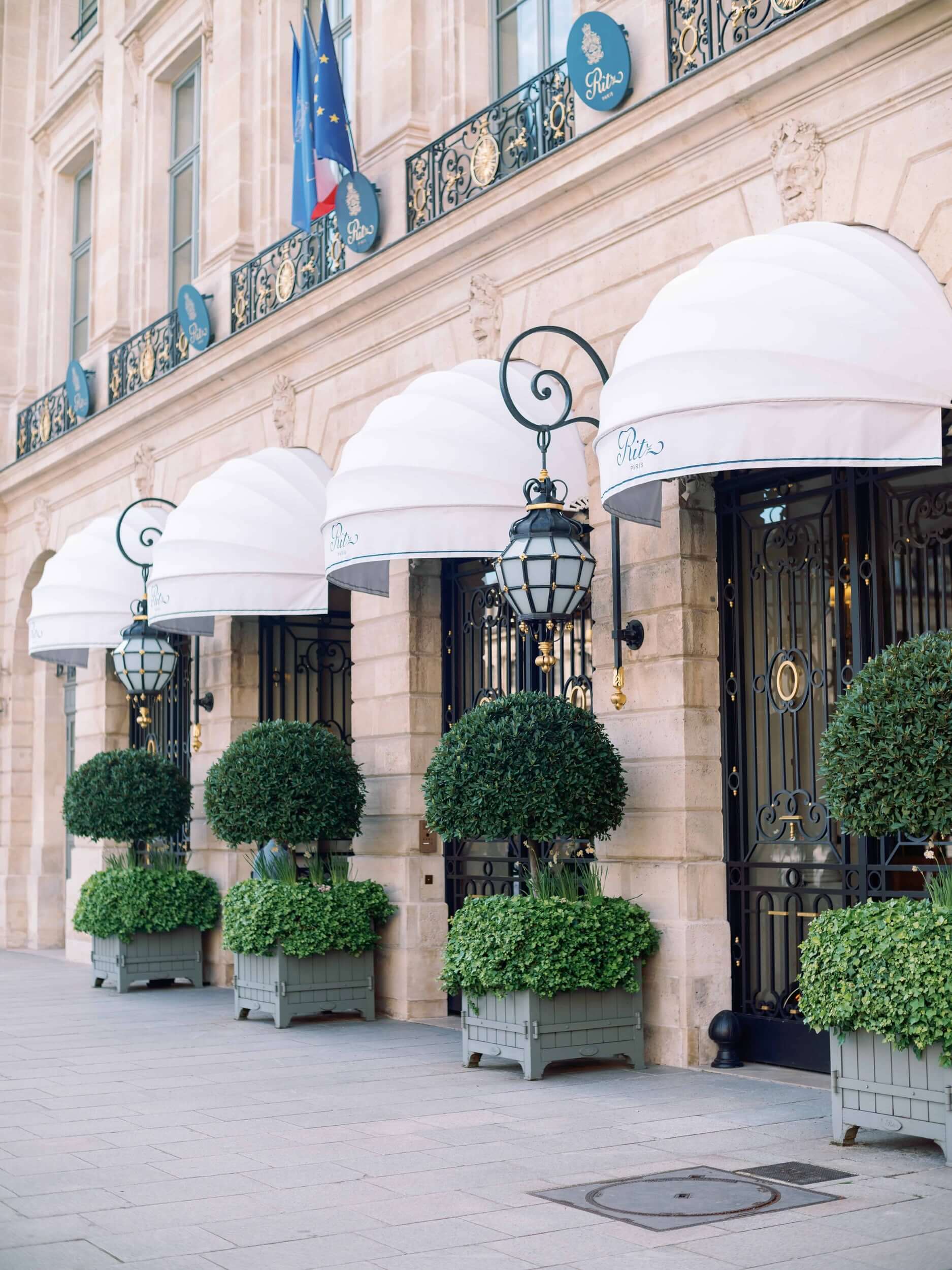
The Ritz Paris: Restraint in a Room Built for Excess
The Salons at the Ritz face the Place Vendôme. North-facing windows, late morning: the light comes in cool, diffused, perfectly even. For couple portraits, it’s close to ideal — the kind of light that requires no correction and no fighting. The challenge at the Ritz is the density of detail everywhere else. Wallcoverings, carpets, period furniture, mirrors — there is so much visual information in every frame that composition requires real discipline. The instinct here is to simplify aggressively: find the angle where the background recedes into a wall of warm gold, bring the couple forward into the light, resist the temptation to show everything at once. Restraint makes these images stronger.

The Shangri-La: The Eiffel Tower as Context, Not Subject
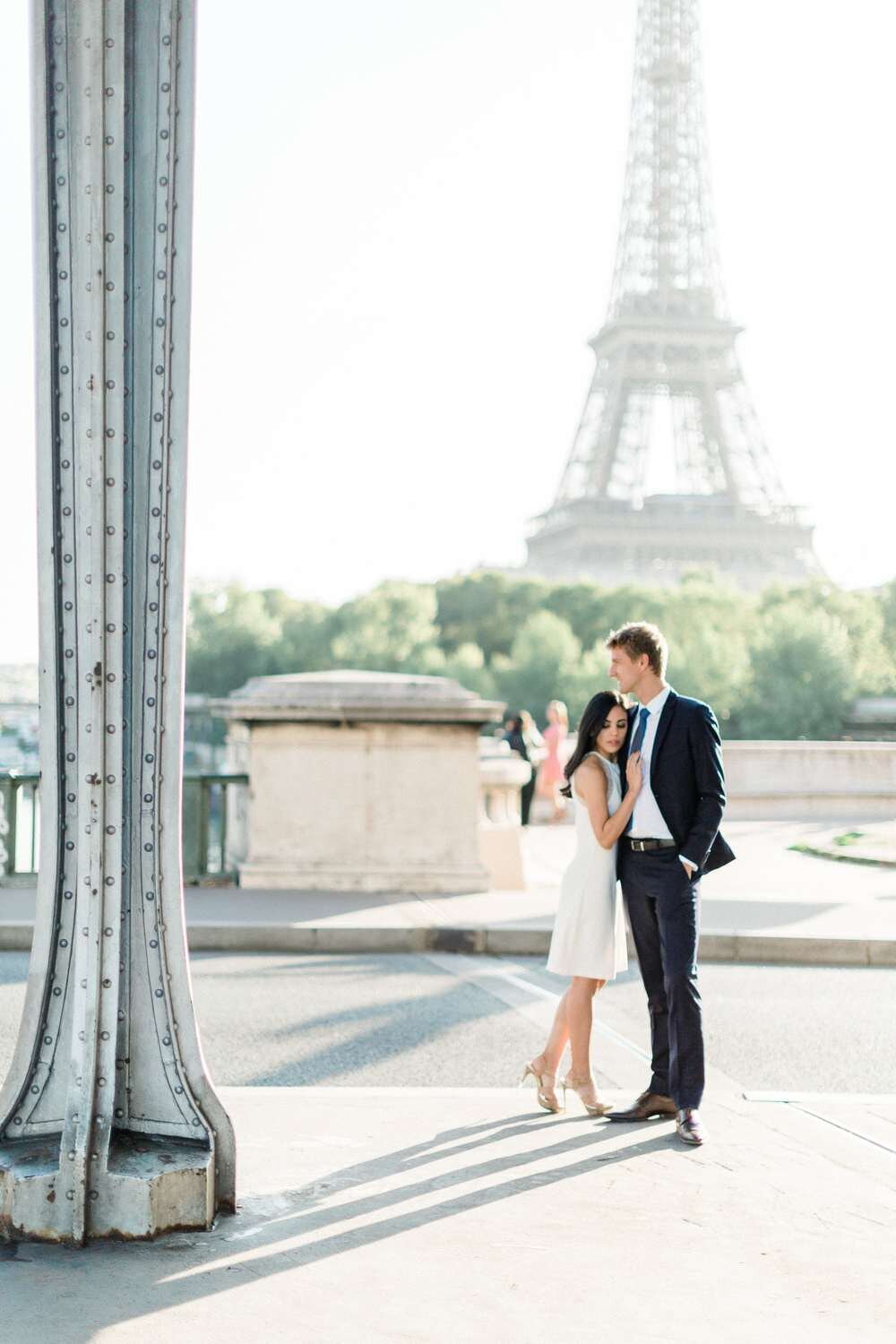
The Shangri-La occupies a former private palace in the 16th, with event spaces that look directly across the Seine to the Eiffel Tower. The view is the obvious element — and the most overused. Every photographer who works in Paris uses it. The question is how. The approach that works is to use the tower as context rather than subject: the couple are always the subject, the tower establishes where they are and what they chose, but it never dominates. The Shangri-La’s ballroom also has ceiling lighting that throws a warm, directional glow perfectly suited to available-light photography during dinner and the first dance. Flash here fights the room rather than serving it.

The Lutetia: Art Deco Light on the Left Bank
The Hôtel Lutetia is the only Palace hotel on the Left Bank, and the only one with an Art Deco soul. Where the Right Bank palaces lean towards 18th-century opulence, the Lutetia is geometric and sleek — sophisticated in a way that feels more contemporary without being less luxurious. Its tall north-facing windows produce a soft, diffused daylight that is genuinely exceptional for photography. The entrance hall at midday in winter, when the sun is low enough to come straight through the front glass without any overhead harshness — that is one of the strongest available-light portrait situations in all of Paris. Paired with a film approach, the Lutetia renders in a way that feels timeless rather than editorial.

What Paris Palace Weddings Demand
These spaces reward preparation and punish improvisation. The photographs that come from Paris Palace weddings, when done well, don’t look like other wedding photographs. They have weight, they have elegance, and — crucially — they feel real. That combination is what I work towards. If you’re planning a Paris Palace wedding and want to talk through the approach, start here.

Your wedding is a singular story. I would love to hear it.
Working With Palace Staff
Every Paris palace hotel has a dedicated events team, and most have worked with photographers enough times to know what cooperation looks like. The difference between a photographer who has been in these spaces before and one who hasn’t is immediately apparent to the staff — and to the images.
The things I ask for in advance: the event order with precise timings, access to the ballroom or ceremony space during the setup hour before guests arrive, and a clear understanding of where I’m permitted to move during the ceremony. These are not unusual requests. They are the difference between working with the venue and working around it.
What Each Venue Offers the Camera
The Ritz is built for ceremony. The Salon Vendôme, the grand staircase, the Hemingway Bar — each space has been designed with the awareness that it will be observed. The challenge is not finding beauty but choosing what to leave out. The Ritz rewards restraint.
The Shangri-La offers something no other Paris palace can match: the Eiffel Tower framed through the windows of the ballroom. This is both an obvious gift and a trap — it is easy to let the view dominate every frame at the expense of the people in the room. The photographers I respect most at the Shangri-La use the tower as context, not as subject.
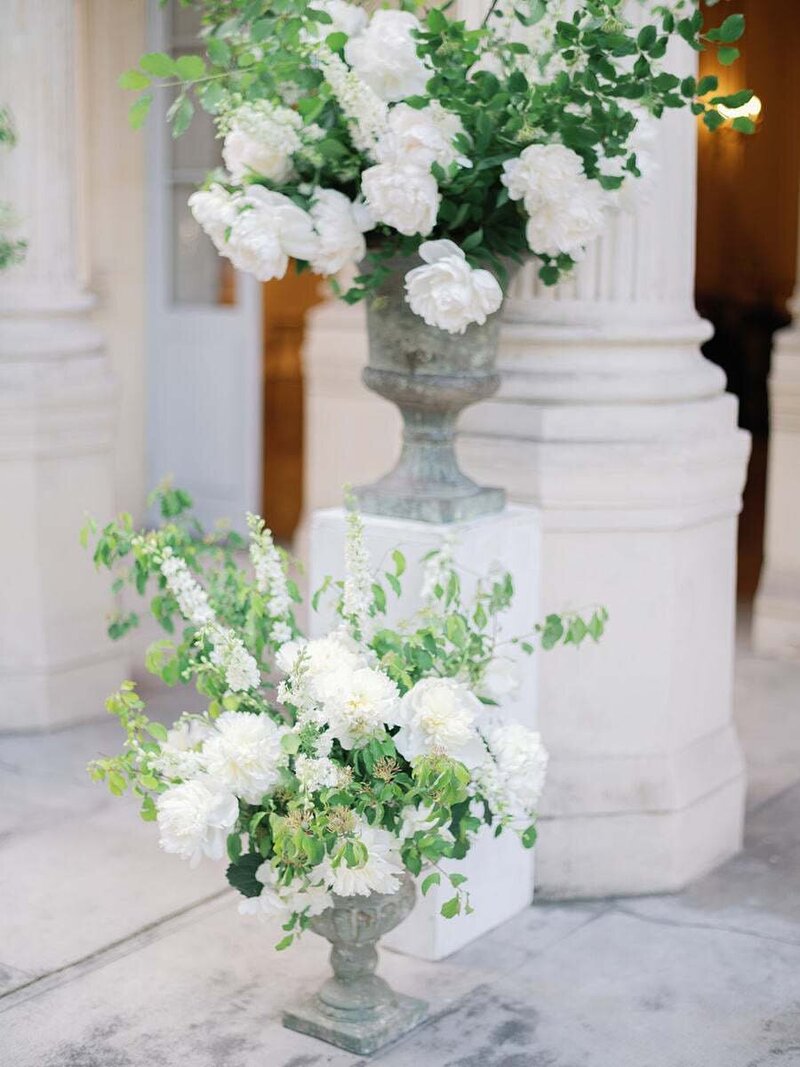
The Four Seasons George V has the most extraordinary flower arrangements in Paris, produced by Jeff Leatham’s team. The visual density of the entrance hall during a wedding is unlike anything else in the city. What photographs best here is the contrast between the grandeur of the décor and the human scale of the couple moving through it.
If you’re planning a wedding at one of these properties and want to talk through what the photography might look like, I’m available for that conversation.







LEAVE A COMMENT