The Château de Sannes sits in the southern Luberon, surrounded by lavender fields, olive groves. And a landscape of such concentrated Provençal beauty that the first photograph almost takes itself. Almost. The estate — a 17th-century château with extensive gardens, a formal allée of plane trees. And views across the valley to the Luberon ridge — is one of the finest wedding venues in Provence. Knowing how to photograph it at its best is a question of understanding its light across the hours of the day.

The Allée of Plane Trees: Architecture and Natural Light
Furthermore, the Château de Sannes’s allée. A long avenue of mature plane trees leading to the château entrance. Is one of the most photographically distinctive elements of the estate. In summer, the trees form a dappled canopy that produces moving, ever-changing light patterns on the ground below. At golden hour, the low sun cuts through the trunks of the trees horizontally, creating alternating bands of light and shadow. Give portrait photographs an almost cinematic quality.
Furthermore, the challenge with the allée is consistency of exposure. The contrast between the lit areas and the shadows is high. And in a digital workflow this can be difficult to manage cleanly. In film, the latitude of the negative handles this contrast range more gracefully. This is one of the reasons I favour a film approach for the portrait work at venues like this one.
The Interior: Provençal Stone and Soft Light
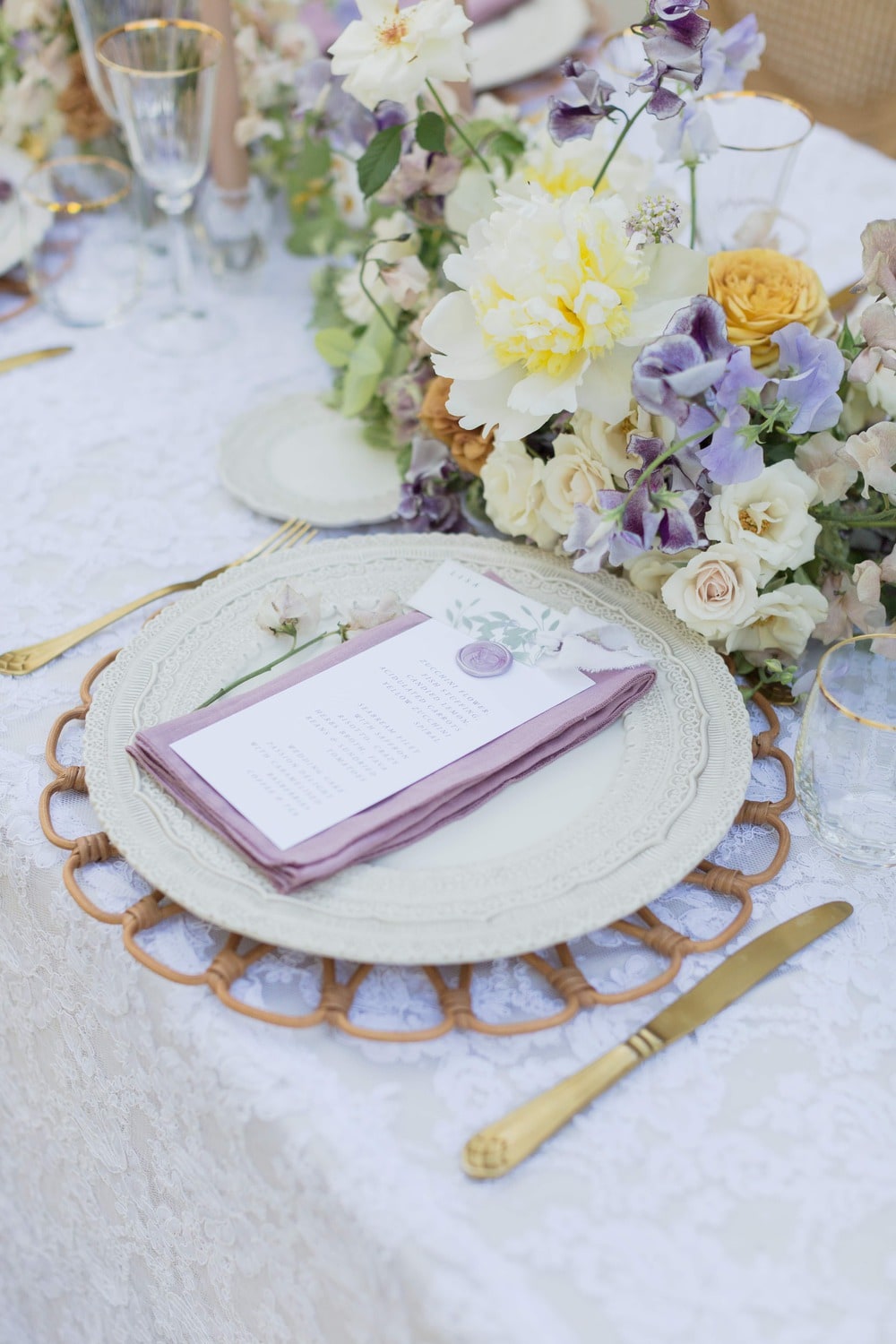
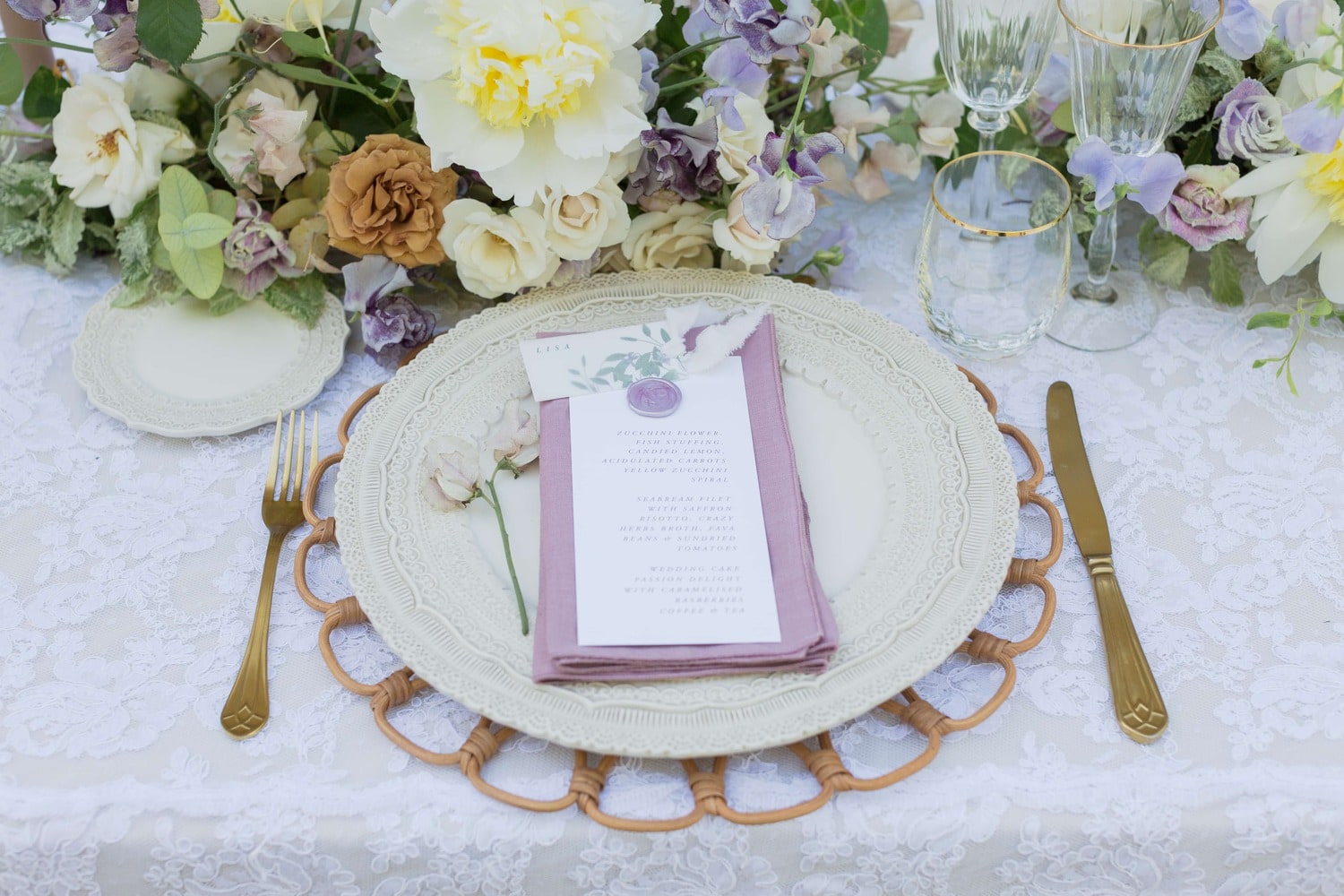
Additionally, the château’s interior spaces have the quality of light typical of Provençal architecture: thick stone walls, deep-set windows. And a coolness in the air that is entirely different from the heat outside. The north-facing rooms receive a soft, even, cool light that is ideal for portrait work. Particularly for getting-ready photographs in the morning. The south-facing dining room, by contrast, fills with warm afternoon light that creates extraordinary table-setting photography and ambient reception images.
The Lavender Fields: Timing Is Everything
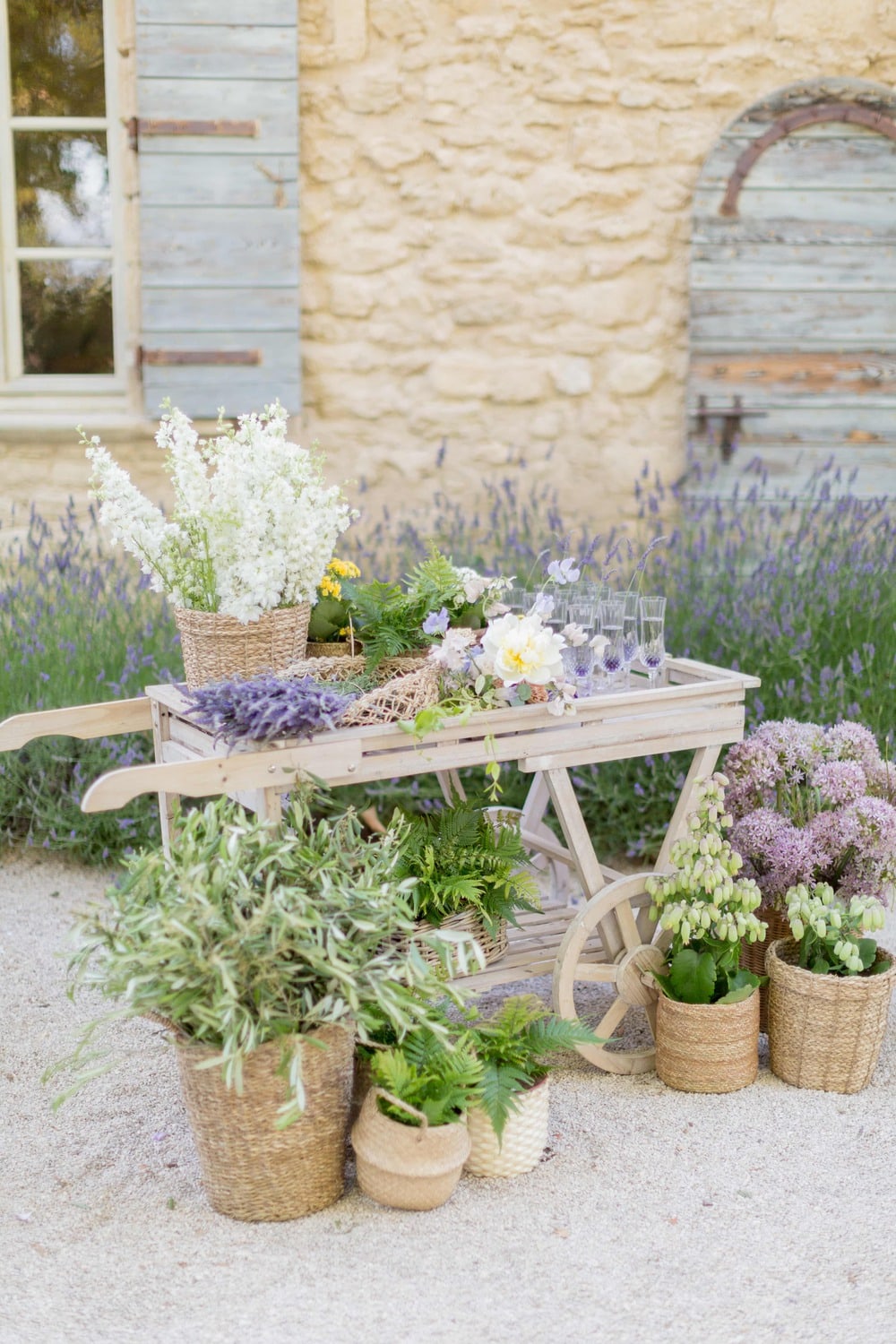
The lavender that surrounds the Château de Sannes blooms from mid-June to mid-July in most years, with peak colour in late June. For wedding photography, lavender in full bloom is an extraordinary backdrop — the purple-to-silver colour field, the rows converging towards a stone building or the distant Luberon ridge, creates images of immediate visual impact. But lavender photography requires strict timing: the fields are at their most photogenic in the early morning, when the dew is still on the flowers and the light arrives at a low angle. By 10am in July, the light has already risen too high. The same principle of reading light before arriving applies here as much as it does in the Paris palaces.
Your wedding is a singular story. I would love to hear it.
The Landscape Around Sannes
The Château de Sannes sits on a plateau in the southern Luberon, at an elevation that gives the estate a view over vineyards and lavender fields toward the village of Cucuron and the summit of the Luberon ridge. The orientation is exceptional for photography: the château faces southwest, which means the ceremony terrace and the gardens receive the full force of late afternoon light in the months that matter most for wedding photography — June through October.
The estate’s lavender fields begin approximately two hundred metres from the château. In late June, when both the lavender and the evening light are at their peak, the landscape here produces images that read as specifically Provençal — not as generic countryside, but as this place, in this season. That specificity is what I’m looking for.
When to Photograph at Sannes
The months I recommend for Château de Sannes: late June (lavender peak, golden hour at 9pm), September (harvest, warm light, empty landscape), and early October (the transition between summer and autumn, when the colours are extraordinary and the crowds are gone). July and August work but the light is harder — overhead and harsh in the middle of the day — and the tourist presence in the surrounding villages is at its highest.
The ceremony time I recommend: late afternoon, ending no earlier than two hours before sunset. This positions the couple’s session in the light that the Luberon produces at its best. The difference between a session at 4pm and one at 6pm in September at Sannes is, in photographic terms, the difference between two entirely different days.
If you’re considering Château de Sannes for your wedding and want to discuss how the photography would work with your specific dates, I’d be glad to help.







LEAVE A COMMENT