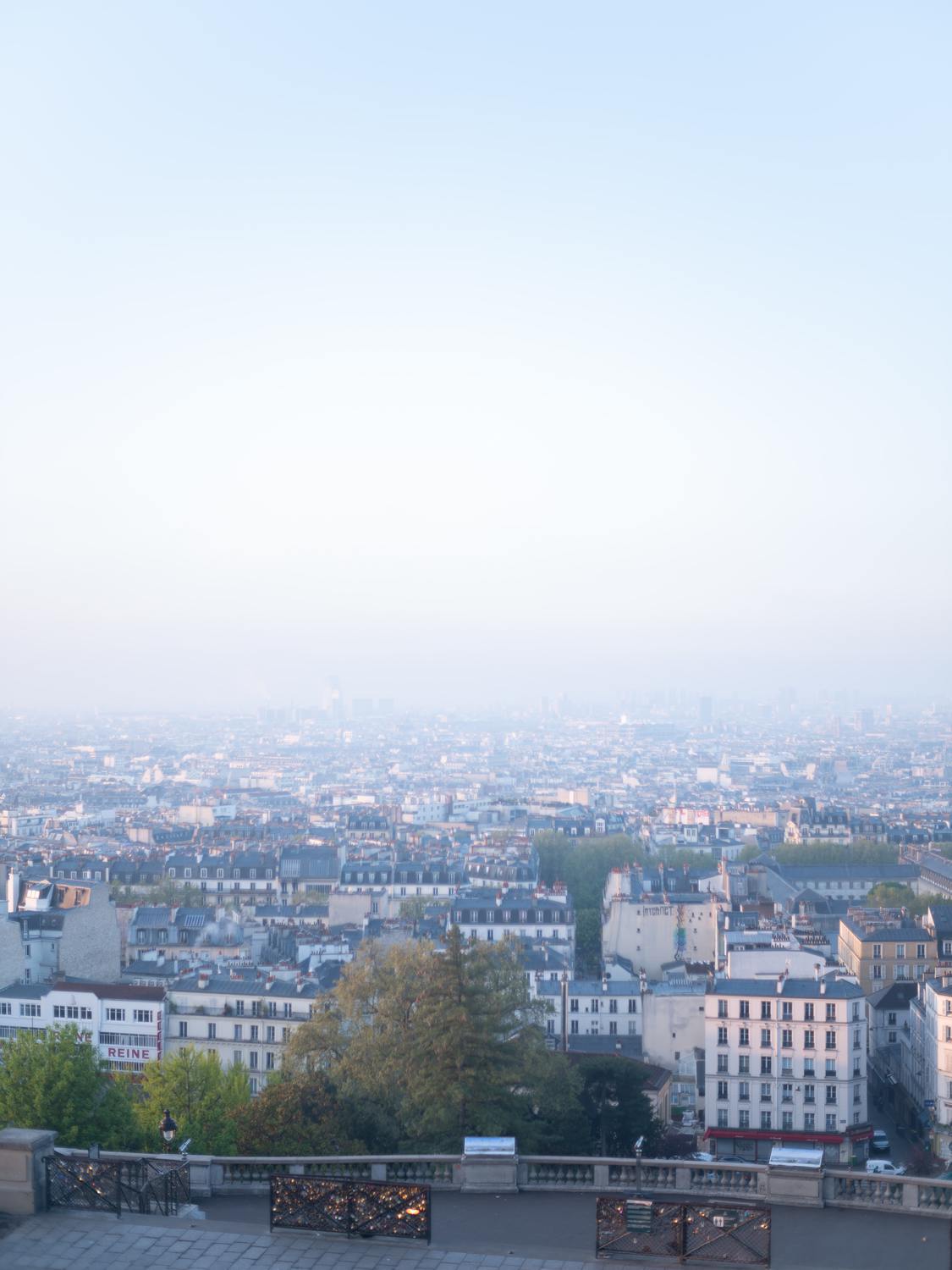
There is no city in the world quite like Paris at dawn. Before the cafes open, before the tourists arrive, before the noise of the day fills the streets — Paris holds still. The light settles differently on stone that has stood for centuries. The architecture does something to the air that I cannot fully explain, only photograph.
Eloping in Paris is one of the finest choices a couple can make. Not because it is romantic in a cliché sense. Because it is real. Just the two of you, a city that has seen everything and still keeps its silence, and a morning that belongs entirely to you. I have watched couples from New York, London, Sydney walk through streets they have never set foot in, and stop. Look up. Go quiet. Paris does this to people. What surprises me is that it does the same thing to Parisians.
Why Eloping in Paris Works Differently Than Any Other City
I photographed a session with Ange in Kyoto. We were out before sunrise, moving through the city before a single tourist appeared. The experience was remarkable. Kyoto holds a particular kind of stillness, a philosophical hush that stays with you.
But Paris is different. It is not the same kind of silence.
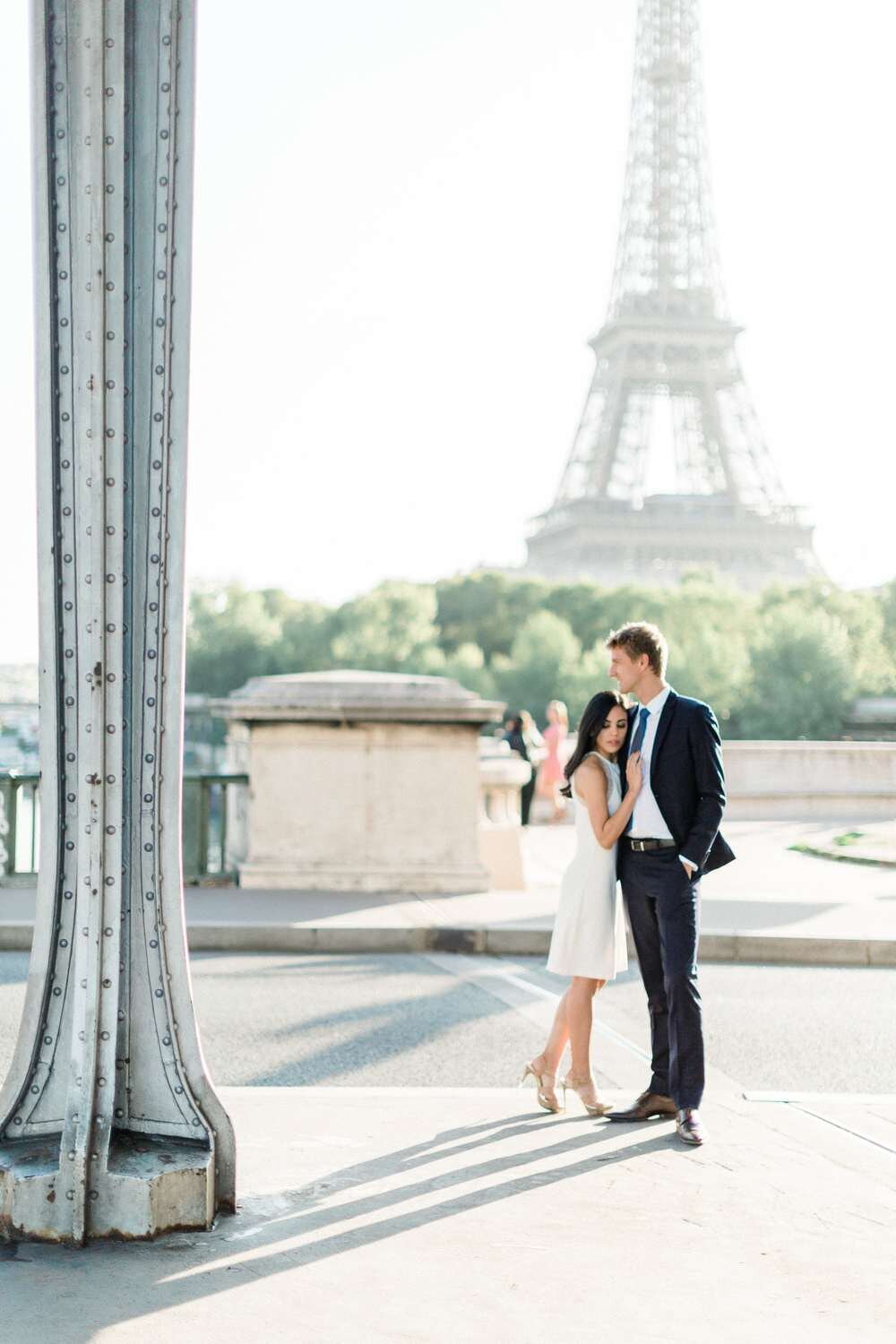
Paris has architecture that carries centuries of human decision-making in every facade, every ironwork detail, every proportioned window. When you stand in front of the Pont de Bir-Hakeim at six in the morning, or beneath the arches near the Palais Royal, you are not just standing in a beautiful place. You are standing in a place that knows it is beautiful. There is a distinction.
Kyoto is meditative. Paris is electric, even when quiet. The combination of that pre-dawn hush and that architectural charge creates something that cannot be reproduced anywhere else. I have tried to place my finger on what makes Paris photographs feel the way they do. Part of it is the light — warm and diffuse in the early hours, bouncing off pale limestone in a way that has no equivalent. Part of it is the scale. The city was designed at human scale, which means the lens finds harmony wherever it turns.
But mostly it is the weight of the place. You feel it even in photographs. The city gives the images a gravity they would not otherwise have.
Paris was built to be looked at. That sounds obvious, but it matters. The Haussmann boulevards, the uniform cornice heights, the pale stone that catches and holds light — these are deliberate choices made over centuries by people who understood proportion and beauty as civic responsibilities. When you stand in the middle of that at six in the morning, with no one else around, you are standing in the longest-running argument in favor of beauty that the modern world has produced. The photographs carry that argument forward.
The Practical Realities of an Elopement in Paris
Eloping in Paris requires less logistics than most couples expect, and more intention than most guides suggest.
On legality and paperwork. A legal civil ceremony in France requires administrative residency for at least forty days prior to the wedding. For most international couples, this is not feasible. The practical path is to marry legally at home, then hold your ceremony and portraits in Paris. Many couples who elope in Paris choose this route. It changes nothing about the experience. The morning still belongs to you.
If a symbolic ceremony matters to you, Paris has no shortage of celebrants who can hold one in a garden, a courtyard, or along the Seine. The legal weight sits elsewhere. The meaning sits here.
On timing. The single most important decision you will make is when to begin. Summer sunrise in Paris falls before six in the morning. By seven, the popular spots are no longer yours. By eight, they are crowded. An elopement session in Paris almost always starts in the dark and ends over coffee. That window, those two hours, is where the images live.
Spring and autumn offer the best light. April and October in particular. The mornings are cooler, the tourists fewer, and the quality of light at sunrise — that pale gold washing over Haussmann stone — is close to unrepeatable.
Winter has its own case. Fog sits over the Seine on December mornings. The city empties. If you can tolerate the cold, January Paris has a severity and a beauty that summer cannot touch.
On locations. There are places in Paris that have been photographed so many times they have become symbols rather than places. Some of them are worth revisiting anyway, because the architecture earns it regardless of how often a camera has pointed at it. Others are not.
The Eiffel Tower at dawn, from the right angle, with no one else there: worth it. The same shot cropped into the same frame as ten thousand others: not the goal.
I have places I return to. Not because they are famous. Because the light enters them at a particular hour in a particular way. A courtyard where the morning sun bounces off pale stone and wraps everything in warmth. A bridge where the water moves slowly and the city rises on both banks in perfect proportion. A passage couverte where the light falls through glass and iron in strips. These are not secrets. They are simply places that reward early arrival.
What Elopements in Paris Actually Look Like
Eloping in Paris is not a photoshoot. It is a morning.
Couples who do this well arrive the day before. They walk the streets at night. They sleep. They wake early and dress in whatever they would want to wear in a photograph they will look at for the rest of their lives. They eat nothing yet, because Paris has croissants and coffee for later.
Then we walk. Not to a spot. Through the city. We move as the light changes. We stop when something catches the eye. A doorway, a reflection on wet stone, a moment of stillness between the two of you while the city comes alive around you.
The images from these mornings have a quality that staged shoots do not. The light is real. The city is real. The two people in the frame are present in a way that differs from the organized posture of a wedding day. They have no guests to manage, no schedule to respect, no family waiting. They have only the city and each other and a morning that is almost entirely theirs.
Even Parisians are surprised by this. I have photographed couples who have lived in Paris for years, who walk these streets every day, and on the morning of their elopement session they look at the city as if for the first time. Something about being still, being present, being seen — it changes what you see.
That is what an elopement in Paris does. It strips the day down to what actually matters. And then the city shows you something it does not show to everyone.
There is a particular kind of attention that arrives when the usual structure of a wedding day falls away. No receiving line. No first dance. No schedule posted in a WhatsApp group. Just the two of you, moving through a city you may have never visited before, or one you have walked every day for years and somehow never truly seen. The photographs made in that attention are different. You can see the difference when you look at them later. Something in the eyes. Something in the way two people stand together when no one else is watching.
Choosing Your Photographer for a Paris Elopement
The photographer you choose will determine, more than anything else, what you carry away from that morning.
This is not about the number of images. It is about whether the person beside you for those two hours knows how to be invisible when you need them to be, present when the moment requires it, and confident enough in the city to lead you without you knowing you are being led.
I photograph the beauty of a place first. The couple within it second. Not because the couple matters less. Because the city is doing something and I want the images to hold both truths: who you are, and where you were. The light, the stone, the proportion of the streets, the gesture of your hand in theirs.
Paris amplifies everything. The dress, the light, the architecture, the stillness. A photographer who understands that will give you images that do not look like anyone else’s elopement photographs. Because they won’t be. The morning you choose, the hour you are there, the particular quality of the light on that specific day — these things never repeat.
That is what I photograph. The thing that never repeats.
FAQ: Eloping in Paris
Can we legally elope in Paris as a foreign couple?
A legal marriage in France requires at least one partner to have resided in the country for forty days prior. For most international couples this is not practical. The common approach is to complete the legal ceremony in your home country and plan a symbolic ceremony or elopement experience in Paris. Legally, the marriage sits at home. The memory lives here.
How early do we need to start an elopement session in Paris?
Start before sunrise. In peak summer this means being in place by 5:30 at the latest. In spring and autumn, around 6:00 to 6:30. The window of calm before the city fills is shorter than most couples expect, and it is the best light you will ever have access to. Plan around it entirely.
What time of year is best for eloping in Paris?
April through May and September through October offer the most consistent combination of light, temperature, and low tourist volume. July and August are workable but require earlier starts and bring more unpredictability in crowd control. January and February have beautiful low light and quiet streets, but you will need to dress for the cold.
Do we need permits to take photos in Paris?
For personal and private photography, no permits are required in public spaces. Some specific locations, notably the Eiffel Tower esplanade, have their own access rules for commercial shoots. For a standard elopement session in the streets, gardens, and bridges of Paris, you are free to be there. The city does not ask permission of people in love.
How long does an elopement session in Paris typically last?
Most elopement sessions run two to three hours. That timeframe covers the transition from pre-dawn darkness through the first full light of morning, which is the most valuable window. Some couples extend into late morning and use the changing light for a different register of images. The structure depends on what you want to do with that day afterward.







LEAVE A COMMENT