Paris changes completely with the seasons — and for a wedding photographer in Paris, each season offers a completely different set of tools. The spring light is soft and even, filtered through newly opened leaves. Summer brings long golden evenings that last until 10pm. Autumn wraps the city in amber and fog. Winter gives you low-angled light and empty streets. Knowing which season works best for your vision is one of the most useful conversations we can have before you book your date.
Spring: Paris in Its Classic Register
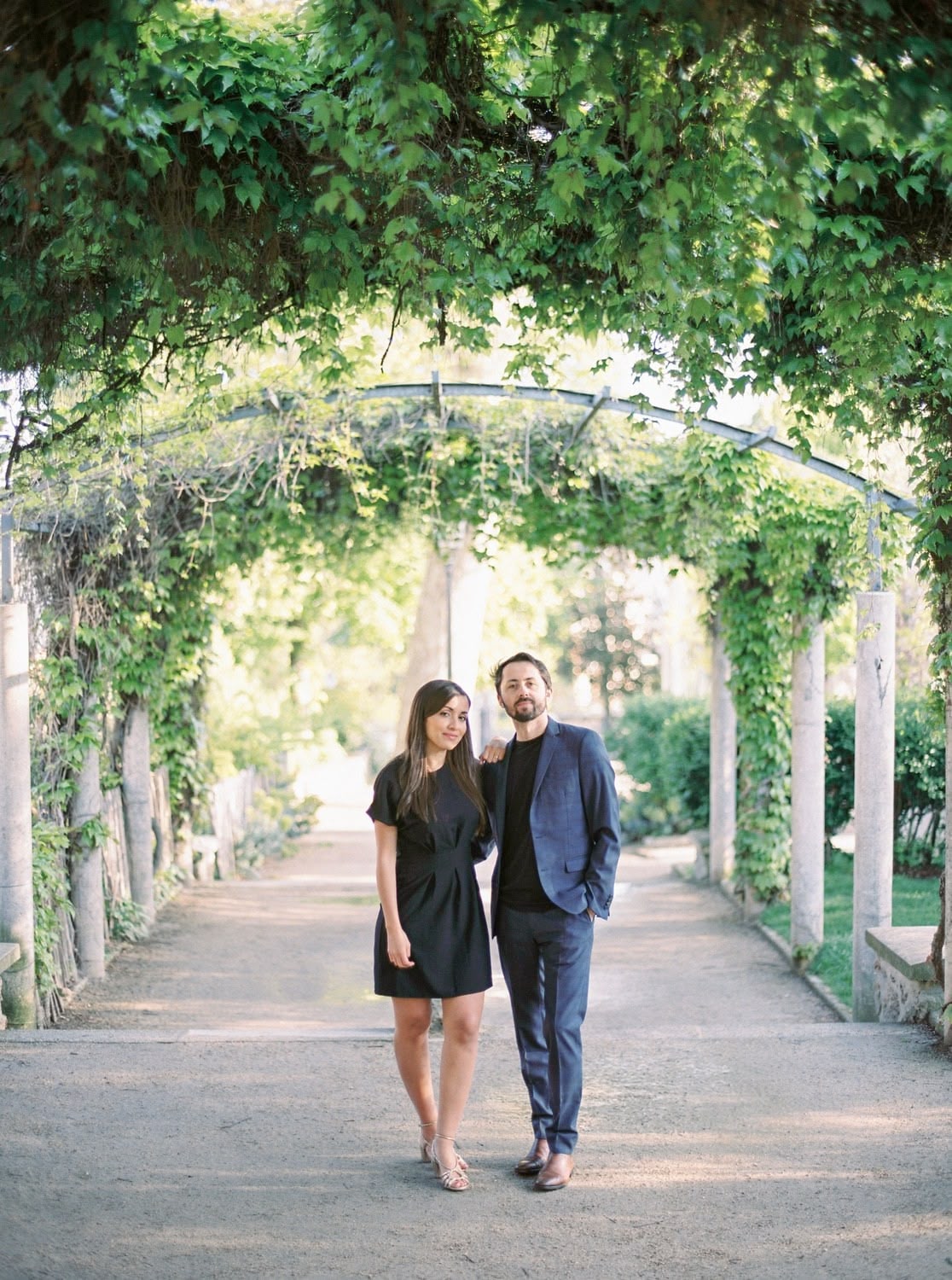
April and May are when Paris looks most like Paris. The chestnut trees along the great boulevards bloom in white and pink, the gardens at the Palais Royal fill with early roses, and the light has a softness that is almost impossible to replicate artificially. For wedding photography, spring in Paris is the most forgiving season — the light is even, the colour palette is warm without being harsh, and the city’s famous parks and gardens are at their most theatrical.
The challenge of spring is the weather. April in Paris is genuinely unpredictable — a morning of brilliant sunshine can become an afternoon of light rain within two hours. I always plan spring weddings with a wet-weather contingency that uses rather than fights the conditions. Rain on Paris cobblestones at dusk, reflected streetlamps, a couple sharing an umbrella — these images often outperform the sunny alternatives.
Summer: The Long Golden Evening
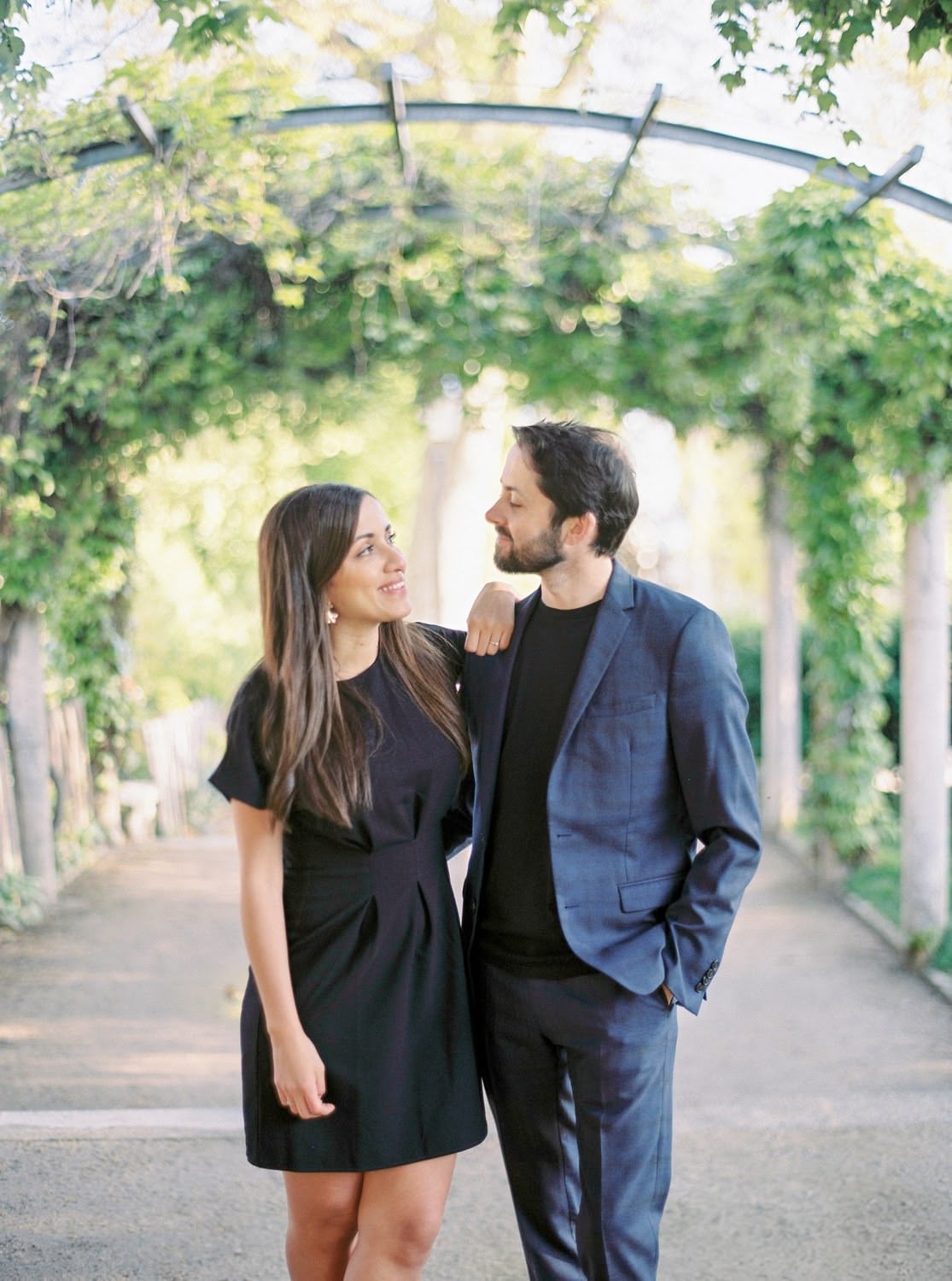
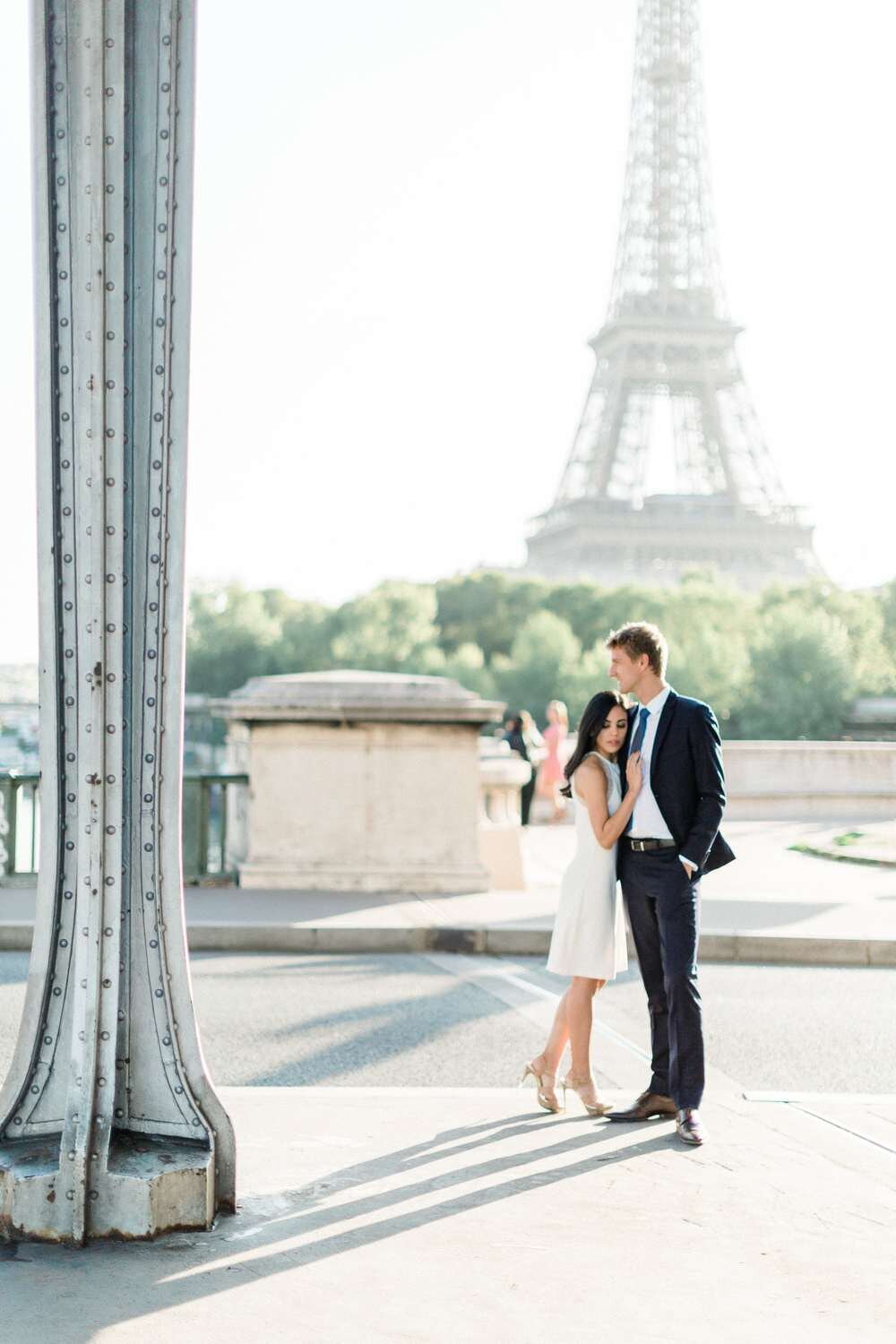
June, July, and August give you something no other city can quite replicate: Paris at 9pm in natural light, with the sun still above the horizon and the Eiffel Tower glowing against a deep blue sky. The summer golden hour in Paris lasts for over an hour, and for a wedding photographer, that window of warm, low, directional light is the most valuable hour of the entire day.
Summer also brings heat, crowds, and the particular challenge of midday light — harsh overhead sun that flattens faces and creates unflattering shadows. I plan summer wedding portrait sessions to avoid the midday hours entirely. Pre-ceremony portraits in the late morning. The couple portrait session reserved exclusively for the golden hour, usually between 7pm and 9pm.

Autumn and Winter: The Underrated Seasons
September and October are, for my money, the best months to photograph a wedding in Paris. The tourist numbers drop, the light becomes more dramatic, and the city’s limestone buildings take on a warmth that summer’s harsh light obscures. The fog that settles over the Seine in November mornings creates a romantic atmosphere that no lighting designer can buy. Winter in Paris means empty streets, low sun, and a quality of blue-hour light that is unlike anything summer produces. For couples willing to plan around these seasons, the images are often the strongest of the year. A film approach pairs particularly well with autumn and winter Paris light.

Your wedding is a singular story. I would love to hear it.
Autumn: The Season I Recommend Most
October is the month I give to couples who ask me when to come. The tourist crowds of summer are gone. The light is low, warm, and directional — arriving at an angle that makes stone glow and shadows stretch across the city in ways that summer’s overhead sun cannot produce. The trees along the Canal Saint-Martin turn gold. The Bois de Boulogne turns amber. The streets of the Marais in October morning light are, in my experience, the most reliably beautiful conditions I photograph in.
November is underused. Couples avoid it because they imagine cold and grey. What they don’t account for is the fog. A November morning in Paris, with low fog over the Seine and the city reduced to silhouettes — these are images that no other season produces. The stripped trees, the quiet streets, the particular intimacy that comes when the city turns inward. For couples who want something that doesn’t look like every other Paris wedding photograph, November is worth considering seriously.
Winter: Short Days, Long Light
December and January are the seasons of low-angled light and empty streets. The sun in Paris in winter rises late and sets early — by 4:30pm in December. The hours between 2pm and sunset are extraordinary for photography: the light comes in at such a low angle that it illuminates faces and facades in ways that summer’s midday sun never achieves. The buildings along the Seine in winter afternoon light are some of the most remarkable scenes the city produces.
The practical advantage of a winter wedding in Paris: the city’s popular spaces — the Palais Royal, the Tuileries, the streets of Saint-Germain — are genuinely empty before 10am. In July, those same spaces require a 6am start to achieve the same result. In January, you have until 9am.
The Practical Question: Morning vs. Afternoon
Regardless of season, the time of your ceremony and couple’s session matters as much as the month. Golden hour in Paris — the last hour before sunset — produces the most consistent photographic results across all four seasons. In June this means 8pm. In December, 3:30pm. Planning your ceremony timing around the available light, rather than fitting the light into an already-set schedule, is one of the most useful decisions a couple can make before booking anything else.
When couples ask me about timing, I ask first about the season, then about the venue’s orientation, then about what kind of images matter to them most. The answer to those three questions usually makes the ceremony time obvious. If you want to have that conversation before you set a date, I’m always willing to help.







LEAVE A COMMENT